
UFC Decision Bet Strategy: Finding Value When Fights Go the Distance
 Available in US
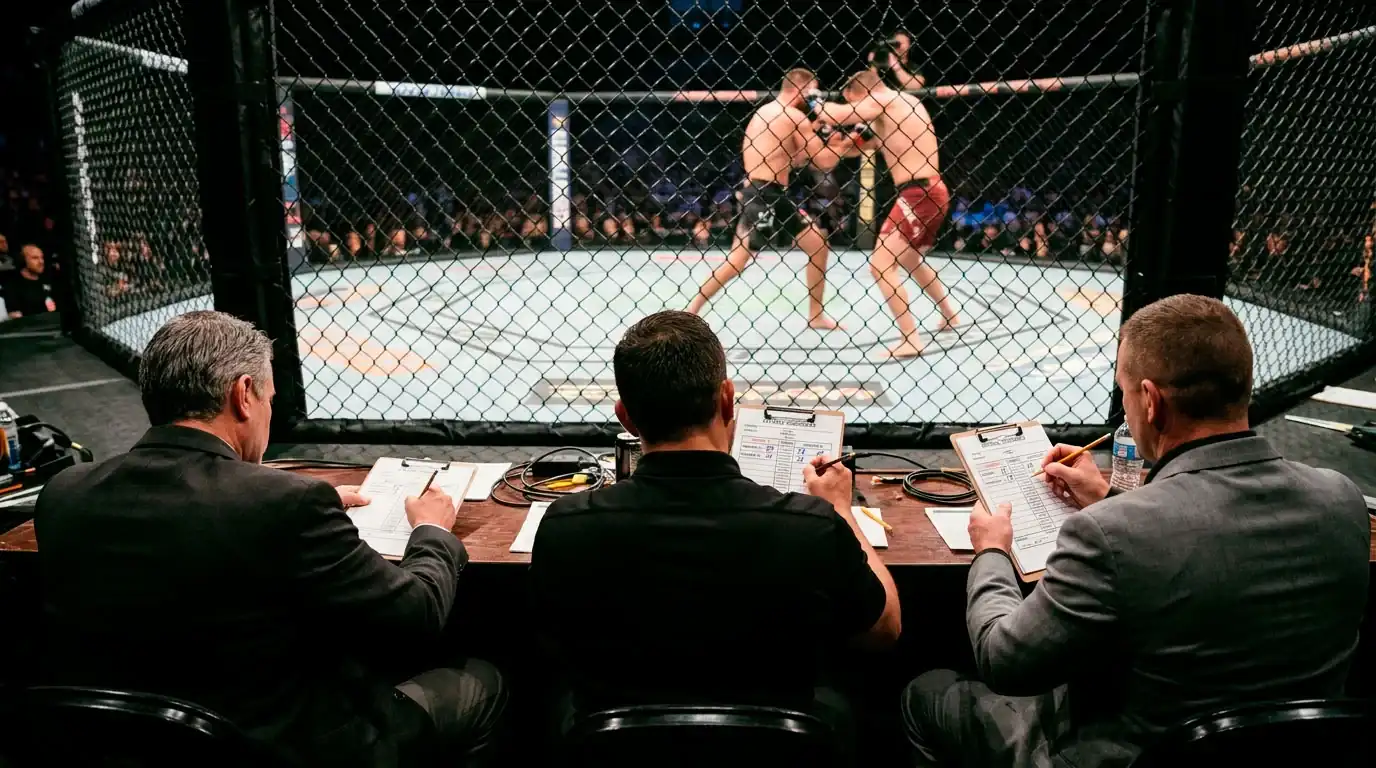
Nobody celebrates a decision. The crowd groans, the social media posts call it boring, and the highlight reel moves on to the next knockout. That collective indifference is why decision betting has been my single most profitable method-of-victory market over the past eight years. UFC GGR has compounded at over 18% annually for five years running, per Fight Matrix, and the flood of new money into the sport overwhelmingly chases finishes. Decision markets get left alone, underbet, underpriced, and consistently offering value to anyone willing to back the outcome nobody wants to watch.
Identifying Decision-Prone Matchups
Not every fight goes the distance, and not every fight that goes the distance was predictable. But certain matchup profiles produce decisions at rates far above the division average, and spotting those profiles before the bookmaker fully prices them is where the edge lives.
The strongest decision indicator is defensive excellence on both sides. When both fighters have significant strike defence above 60% and takedown defence above 70%, the fight is structurally resistant to finishes. Neither fighter gets hurt badly enough to be stopped, neither fighter gets taken down consistently enough to be submitted, and the bout grinds toward the scorecards through three rounds of competitive but controlled action.
The second indicator is low finishing rate against quality opposition. A fighter who has stopped regional-level opponents but gone to decision in every fight against ranked UFC competition has a context-dependent finish rate, and the context that matters for his next fight against a ranked opponent is the lower number. The global MMA market grew from roughly 100 major events in 2020 to over 200 by 2025, per PTF Lab estimates, meaning more fighters enter the UFC with inflated regional records that do not predict UFC-level finishing ability.
The third indicator is tactical similarity. Two volume strikers who prefer the same range, the same pace, and the same defensive positioning tend to neutralise each other. Neither can impose a style advantage because both are fighting the same fight. These matchups grind. They are unglamorous; they are frustrating for fans, and they are reliable decision candidates.
I maintain a shortlist of active fighters I classify as “decision-prone” based on their last five bouts. When two fighters from that list face each other, the decision line is almost always my first market to check.
UFC Scoring Criteria: What Judges Value
If you are going to bet on decisions, you need to understand what the judges reward, because the scoring criteria determine not just whether the fight goes the distance but who wins when it does.
UFC fights are scored under the Unified Rules of MMA, which prioritise effective striking and grappling above everything else. Effective striking means landing clean, impactful shots rather than high-volume, low-damage output. Effective grappling means achieving and maintaining dominant positions, advancing through transitions, and attempting submissions, not simply holding an opponent against the cage without progressing.
Octagon control, dictating the pace, location, and position of the fight, is a secondary criterion that judges consider only when effective striking and grappling are equal. Aggression, moving forward and attempting to finish, is the tertiary criterion, considered only when both primary and secondary criteria are even.
For decision bettors, this hierarchy matters because it tells you which fighter is likely to win a decision. A fighter who lands fewer strikes but lands them with more impact is favoured under the scoring system over a volume striker who throws constantly but connects lightly. A wrestler who controls his opponent on the ground but fails to advance position or attempt submissions may not score as highly as the fighter on bottom who threatens with submissions from guard. Understanding these nuances lets you not only predict that a fight will go to decision but also estimate who the judges will favour.
When Decision Markets Are Mispriced
The mispricing pattern I exploit most frequently is the “exciting fighter” discount. When both fighters in a matchup have reputations for action – fast-paced striking, walk-off knockouts, fan-friendly styles, the public loads money onto KO/TKO outcomes. The bookmaker responds by compressing finish odds and stretching the decision line. But reputations are backward-looking, and the specific matchup in front of you may not produce the expected fireworks.
Two aggressive strikers who both have strong chins often produce the opposite of what fans expect. Instead of a quick knockout, you get a three-round war where both fighters absorb significant damage without being stopped. The fight is exciting, the crowd loves it, but it goes the distance. The decision line at 4.00 or higher was generous given the defensive metrics, and the bettor who backed it profits while the KO bettor watches a full fight with nothing to show for it.
Another mispricing occurs in women’s divisions, where decision rates run historically higher than in men’s divisions at the same weight. The market often applies men’s division finish-rate assumptions to women’s fights, underpricing the decision outcome by several percentage points. I check the decision line on every women’s bout as standard practice, the over/under rounds guide covers the related dynamics of how fight duration expectations affect pricing across divisions.
A third opportunity appears in five-round championship fights between two elite fighters. When both competitors have the skill to avoid being finished and the cardio to maintain output through twenty-five minutes, the decision probability is substantially higher than in a three-round bout. Yet the decision line in five-round fights is not always adjusted proportionally – the bookmaker may extend the fight duration pricing but not fully recalibrate the method-of-victory distribution, leaving the decision outcome underpriced relative to the extra rounds.
Decision betting requires patience and a willingness to back outcomes that are never going to make your social media feed. But the maths is on your side: when 40% to 50% of UFC fights end in decisions and the market prices decisions as 25% to 30% probabilities, the gap is structural and exploitable. You do not need to be right about every fight. You need to be right about the pattern, and the pattern has held for every year I have been tracking it.
What percentage of UFC fights end in a decision?
Across all divisions and fight durations, roughly 40% to 50% of UFC bouts reach the scorecards. The exact figure varies by division – lighter weight classes produce more decisions than heavyweight – and by the number of scheduled rounds, with five-round fights going to decision more frequently than three-round bouts.
Are split decisions and unanimous decisions priced differently?
Most UK bookmakers combine all decision types – unanimous, split, and majority – into a single decision market. A few operators offer separate unanimous and split decision markets on major fights, but these are niche offerings. For standard decision betting, the payout is the same regardless of the specific decision type.
Which UFC weight classes have the highest decision rates?
Lightweight, featherweight, and women’s strawweight consistently produce the highest decision rates. These divisions feature technically skilled, defensively sound fighters with sufficient cardio to sustain output through three rounds, reducing the probability of stoppage finishes.
Written by the editors at ufc Betting uk.