UFC Live Betting: How In-Play MMA Markets Work and When to Strike
 Available in US
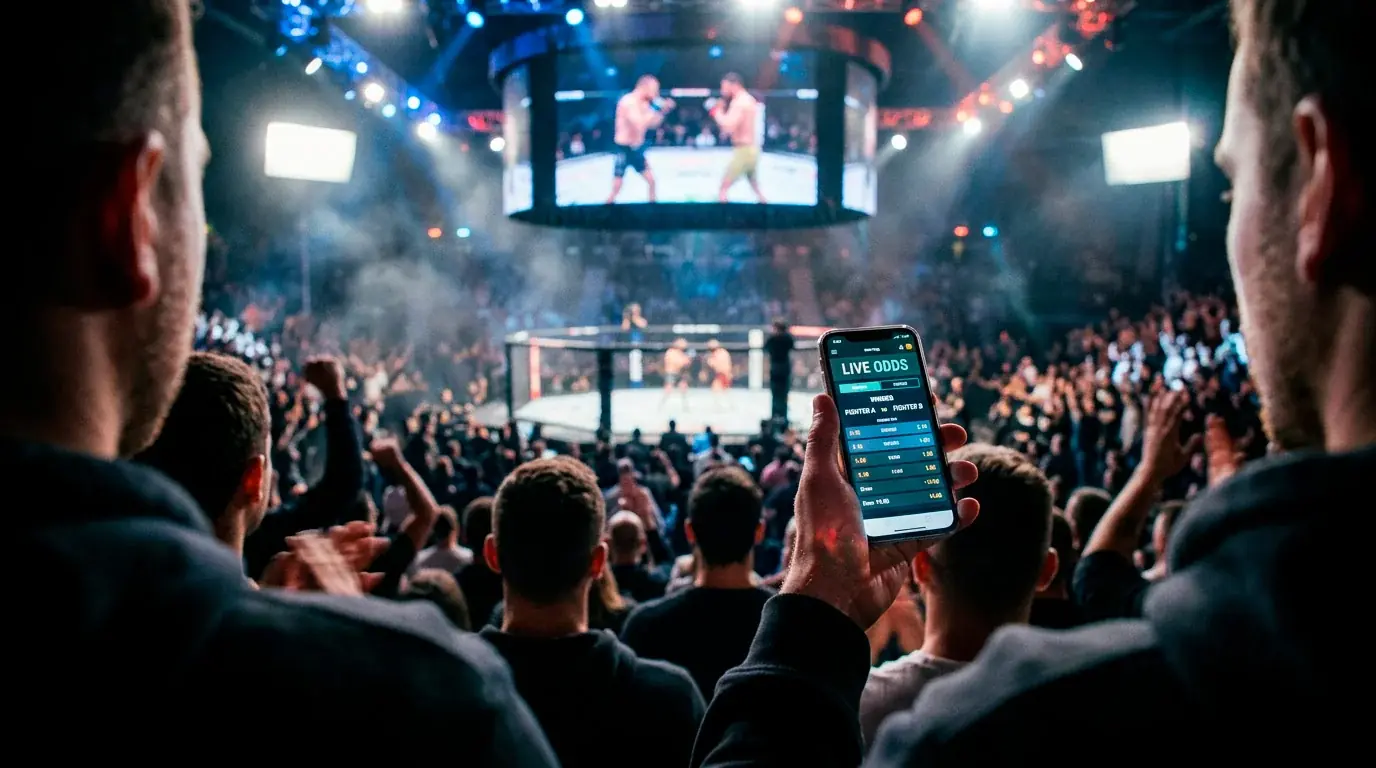
The most profitable bet I placed last year happened during a fight, not before it. A lightweight favourite was winning clearly on the scorecards but took a hard shot that buckled his legs in the second round. His in-play odds spiked from 1.20 to 1.85 in a matter of seconds. I had watched this fighter recover from similar moments three times in his career, knew his chin was better than the market’s panic suggested, and backed him at a price that would never have been available pre-fight. He recovered, dominated the third round, and won by unanimous decision. That is live UFC betting at its best: exploiting the market’s overreaction to in-fight events using knowledge the algorithm does not have.
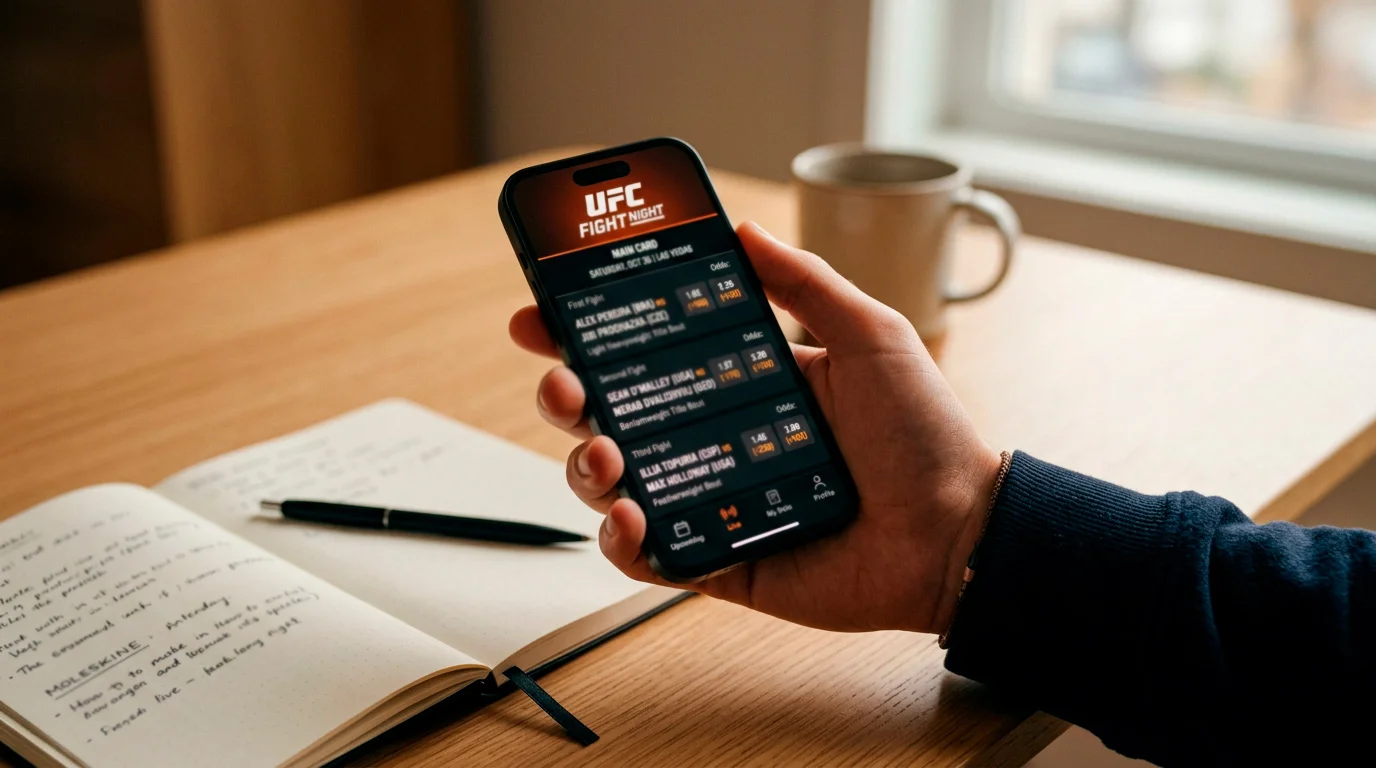
In-play wagering on UFC has grown rapidly alongside the sport itself. Around 95% of online gambling in the UK takes place from home according to Gambling Commission data, and in the 18-24 age group, 76% bet via mobile phone. That mobile-first audience is perfectly positioned for live betting – phone in hand, fight on screen, bet slip a tap away. The infrastructure exists. The question is whether you can use it intelligently rather than impulsively.
This guide covers how UFC live markets operate, what drives round-by-round odds movement, when the sharpest timing windows open, and how to maintain discipline when the pace of a fight is pushing you toward reactive decisions.
Table of Contents
- How UFC In-Play Markets Open and Close
- Round-by-Round Odds Movement: What Drives the Shifts
- Timing Your Live Bet: Between-Round and Mid-Round Windows
- Three Live Betting Scenarios: Knockdown, Takedown, Cut
- Live Betting Features at UK Bookmakers: Cash Out, Streaming, Alerts
- Discipline and Bankroll in Live UFC Sessions
- Live UFC Betting Questions
How UFC In-Play Markets Open and Close
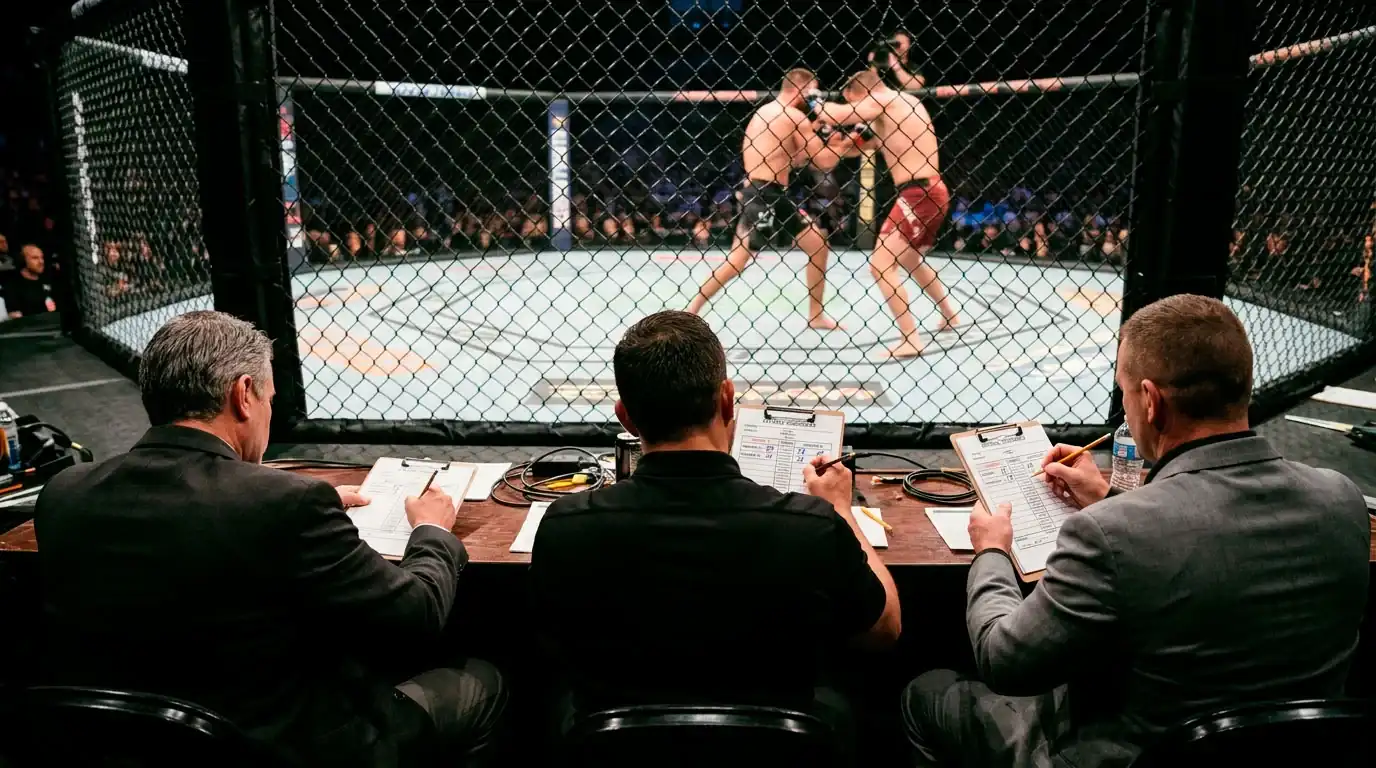
The UK processes roughly 290 million online bets on real-world events each month, per Statista, and an increasing share of that volume flows through in-play markets. For UFC, the mechanics are distinct from ball sports because the action is continuous within rounds and the potential for a fight-ending sequence exists at every moment.
Most UK bookmakers open their UFC live markets shortly before the fighters touch gloves. Pre-fight markets, moneyline, method of victory, over/under rounds – transition into live pricing, with odds updating every few seconds based on the bookmaker’s in-play model. Between rounds, the market typically suspends briefly while traders adjust their baseline, then reopens with revised prices reflecting the round that just ended.
During the round itself, markets may suspend repeatedly. A significant strike, a knockdown, a takedown or a submission attempt will trigger a suspension because the in-play pricing algorithm cannot price the new situation fast enough. After the event resolves, the fighter recovers, the takedown is defended, the submission attempt fails – the market reopens at adjusted odds. These suspensions are not glitches; they are the bookmaker protecting itself from being caught on the wrong side of a rapidly changing situation.
The practical consequence for live bettors is that the best prices are available in the brief windows between significant events, the calm stretches where both fighters are standing at range or working in a neutral clinch position. During these moments, the market reflects a steady-state assessment of the fight so far. The moment something dramatic happens, the market either suspends or jumps to a new price that has already absorbed the information. Chasing the price after a knockdown rarely captures value; the new price already reflects the knockdown’s impact.
Understanding this rhythm – calm periods with stable pricing punctuated by volatile events that trigger suspensions, is fundamental to live UFC betting. You are not trying to react faster than the algorithm. You are trying to form a better assessment of the fight’s trajectory during the calm periods, then executing before the next volatile event changes the landscape.
One structural difference between UFC live betting and in-play markets on football or cricket: there is no half-time, no drinks break, no natural pause in the middle of a round. The only guaranteed window of stability is the 60-second break between rounds. In a three-round fight, you get two of those windows. In a five-round championship bout, you get four. That constraint forces a level of preparation and decisiveness that most ball-sport live bettors never experience. Every second of those between-round breaks matters, which is why your pre-fight scenario planning is not a luxury – it is the framework that lets you act quickly when the window opens.
Round-by-Round Odds Movement: What Drives the Shifts
I tracked the live odds on a middleweight title fight last year and recorded the price at the start and end of every round. The favourite opened at 1.45. After winning a dominant first round on the scorecards, their price shortened to 1.22. After a competitive second round, it drifted to 1.30. After landing a knockdown in the third, it compressed to 1.10. The movement told a story that matched what I was seeing on screen, but the size and speed of each shift was more revealing than the direction alone.
Round-by-round odds shifts are driven by four factors working simultaneously. First, scoring: the bookmaker’s model estimates which fighter won each round and adjusts the probability of them winning the overall bout on the judges’ scorecards. A fighter who wins the first two rounds of a three-round fight is heavily favoured because the opponent must win the third decisively to earn a draw (and cannot win the fight on points). Second, damage: visible cuts, swelling, limping or laboured breathing signal that a fighter’s physical capacity is diminishing, which increases the probability of a stoppage.
Third, momentum: fighters who are pressing forward, landing clean, and controlling pace tend to see their odds shorten even when the scorecards are not dramatically separated. Momentum is partly a proxy for the first two factors, but it also captures the psychological dimension – a fighter losing momentum often becomes more desperate, takes greater risks, and exposes themselves to finishes. Fourth, method probability shifts: if a fight that was expected to end by knockout is turning into a grappling contest, the method of victory and over/under markets adjust, and those adjustments feed back into the moneyline.
Unabated, the analytical betting platform, has made the point that UFC odds are among the hardest in professional sport to price correctly, and that difficulty intensifies during a live fight. The bookmaker’s model is processing visual data through a delayed feed, making probabilistic judgments about human behaviour under extreme physical stress. It is good at this – better than most punters give it credit for, but it is not perfect. The moments where the model underreacts or overreacts to in-fight events are where live value lives.
Timing Your Live Bet: Between-Round and Mid-Round Windows
There are exactly two reliable timing windows for placing live UFC bets with an informational edge, and everything outside those windows is either chasing or gambling on reaction speed.
The first window is between rounds. The horn sounds, both fighters return to their corners, and the market reopens with updated pricing based on the round that just completed. This is a 60-second window where you have time to assess what happened, compare it to your pre-fight analysis, and decide whether the new price represents value. Between rounds, the market is relatively stable because no new in-fight information is being generated. Your edge here comes from having a better read on the fight’s direction than the operator’s live pricing – particularly regarding cardio, corner advice you can lip-read on camera, and subtle signs of physical deterioration that the algorithm may underweight.
The second window is mid-round, during extended ground exchanges or clinch work. When two fighters are tied up against the cage or working from guard on the ground, the pace of the fight slows and the probability of a sudden fight-ending sequence drops temporarily. The market remains open but relatively flat during these stretches. If you can read grappling positions well, if you know the difference between a fighter holding position and a fighter setting up a submission, or between a controlled grind and a desperate scramble – you can exploit the model’s limited ability to assess grappling nuance in real time.
What you should avoid: placing bets in the immediate aftermath of a knockdown, a flash submission attempt, or a dramatic exchange. The market either suspends (in which case you cannot bet at all) or reprices so aggressively that the new odds already reflect the event. Trying to bet on a fighter who just got rocked is almost always a bad idea, not because the fighter cannot recover, but because the new price has already factored in both the damage and the recovery probability. You are not getting a bargain; you are getting the market’s rapid reassessment, which is usually accurate.
Three Live Betting Scenarios: Knockdown, Takedown, Cut
Theory is useful, but live betting is learned through pattern recognition. Here are three scenarios I encounter regularly, each with a different risk profile and a different approach to finding value.
Scenario one: the knockdown. A favourite gets dropped by a clean shot in the first round. The crowd erupts. The live odds spike – the favourite goes from 1.35 to 2.10 in seconds. The question is whether the knockdown reflects a genuine power mismatch or a flash event that will not repeat. If the fighter who got dropped has a history of recovering well, good chin, strong takedown game to buy time, excellent cardio to weather storms – the 2.10 price is likely an overreaction. But if the knockdown exposed a defensive flaw that the opponent can exploit repeatedly, the new price may actually be generous to the hurt fighter. The answer is in the film you watched before the fight, not in the adrenaline of the moment. I make my knockdown-response assessment during fight week and write it in my notes. When the knockdown happens live, I check my notes, not my gut.
Scenario two: the dominant takedown. A grappler secures a takedown early in the round and begins controlling from top position. The market shifts toward the grappler, shortening their odds by 15-20%. The value question here depends on what happens next. If the bottom fighter is an experienced scrambler who typically returns to their feet within 90 seconds, the odds shift overstates the grappler’s advantage. If the bottom fighter has a history of staying on their back for extended periods, the market may be underreacting, the grappler’s control is likely to translate into round-winning positions and potential ground-and-pound stoppages. Ground control time is one of the least intuitive metrics for casual viewers but one of the most predictive for fight outcomes in grappling-heavy bouts.
Scenario three: the cut. A fighter suffers a visible cut above the eye from an accidental clash of heads or a legal elbow. The market reacts, but the magnitude of the reaction depends on the cut’s severity, location and the doctor’s response. A cut over the eye that is bleeding heavily will trigger a doctor’s inspection between rounds – and the risk of a TKO stoppage due to the cut becomes a real factor in the pricing. A small cut that the cutman controls effectively may barely move the line at all. My approach: I back the cut fighter only if I genuinely believe the cut will not affect their performance, the doctor is unlikely to stop it, and the price has moved enough to create a clear value gap. In all other cases, I stay out. Cuts introduce a non-skill variable that makes the fight harder to model, and harder-to-model fights are fights where I want less exposure, not more.
What connects all three scenarios is the same principle: your pre-fight preparation determines the quality of your live decisions. The knockdown assessment, the grappling read, the cut evaluation, all of these require context that can only come from studying the fighters before the first bell rings. Without that preparation, every live bet is a reaction, and reactions in a high-arousal environment skew toward emotional rather than analytical reasoning. The punters who profit from live UFC betting are not faster clickers. They are better prepared.
Live Betting Features at UK Bookmakers: Cash Out, Streaming, Alerts
The tools your platform offers for live betting matter almost as much as your analytical framework. Three features separate a usable live betting experience from a frustrating one.
Cash out lets you settle a bet early at a price determined by the current live odds. If you backed a fighter pre-fight at 2.50 and they are dominating after two rounds, the cash-out offer might return 80% of the potential payout without waiting for the final bell. Cash out is essentially selling your position back to the bookmaker, and the bookmaker charges a margin on that transaction – so the cash-out price is always less than what a mathematically fair settlement would be. I use cash out sparingly, primarily when new information during the fight, an injury, a dramatic momentum shift, a cut that worries me – changes my assessment enough that locking in a reduced profit is smarter than riding the remaining variance.
Live streaming is critical for in-play UFC betting because you need to see the fight in real time, not on a delayed broadcast, not through a text commentary feed, but with your own eyes on the action. UFC’s shift to bet365 as its official betting partner, per SponsorUnited, has implications for which platforms are likely to offer the best integrated streaming and betting experience for UK customers. Not every bookmaker streams UFC events, and those that do may have variable quality and latency. If your stream is delayed by even five seconds relative to the live feed, the odds on your screen are already stale. Before relying on any platform for live UFC betting, test the stream latency during a Fight Night card where you are not planning to bet.
Alerts and notifications – push alerts for odds movements, fight start times, and market openings, are a convenience feature rather than a strategic one. They keep you informed without requiring you to stare at your phone for three hours during a card. Set alerts for the specific fights you have analysed and ignore everything else. The last thing you want during a live betting session is a push notification tempting you into a fight you have not studied.
Discipline and Bankroll in Live UFC Sessions
Live betting amplifies every behavioural weakness a bettor has. The speed of the action, the emotional intensity of the fights, the constant availability of new markets – all of it conspires to push you toward impulsive decisions. The Gambling Commission’s survey data indicates that 2.7% of respondents scored at a level associated with potential loss of control over gambling activity. Live betting is the environment where that risk is highest, because the gap between impulse and execution is a single tap on your phone screen.
My live betting bankroll is separate from my pre-fight bankroll. I allocate a fixed amount per card for live wagers, typically one to two units total – and when that allocation is gone, I stop. No exceptions. This separation is not optional; it is the structural barrier between “strategic live betting” and “throwing money at fights because I am watching them.”
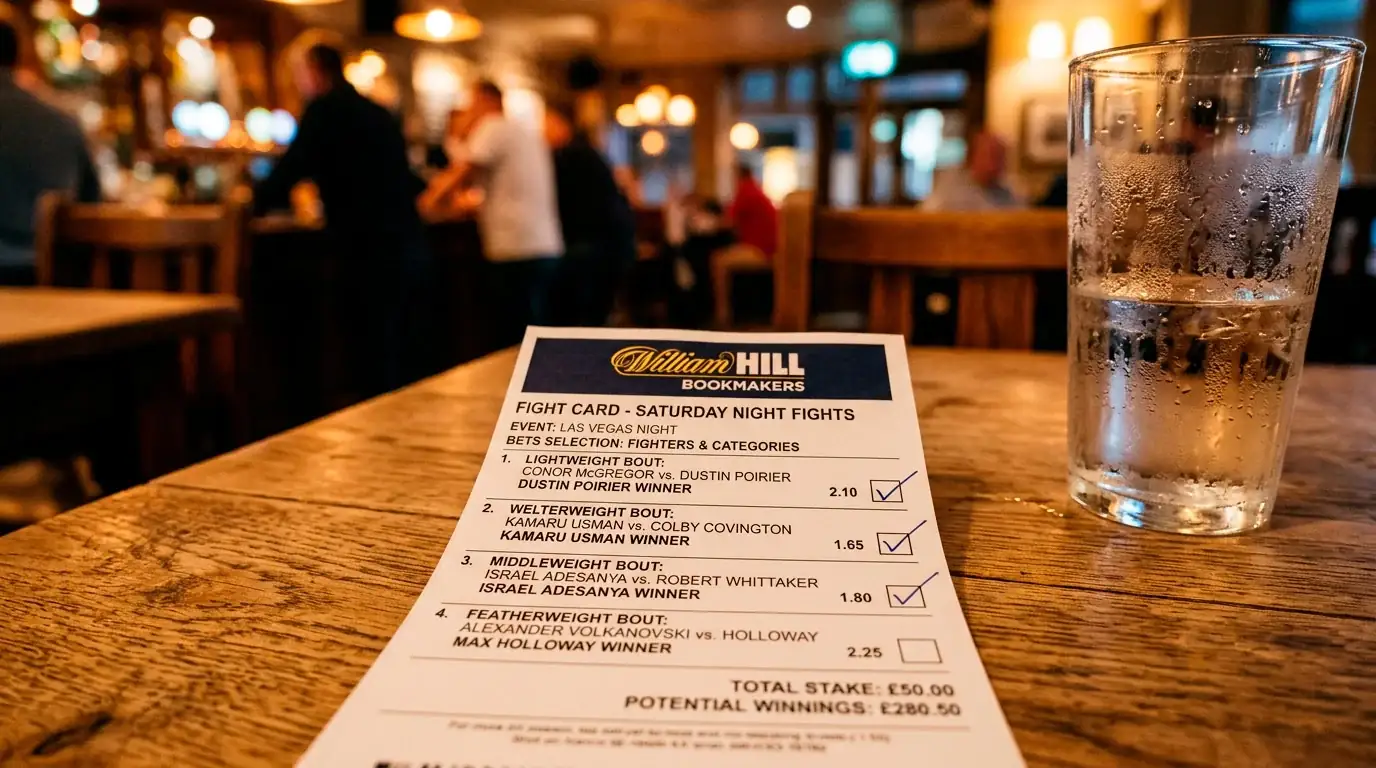
Before each card, I identify a maximum of three fights where I plan to watch for specific live betting opportunities. For each of those fights, I write down the scenario that would trigger a bet, the price range I would need, and the maximum stake. If the scenario does not materialise, or the price does not reach my threshold, I do not bet. This pre-commitment eliminates the decision fatigue that accumulates over a four-hour fight card and prevents the slow drift from disciplined analysis to reactive punting.
The hardest rule to follow: do not live bet a fight you did not analyse beforehand. Watching a fight creates the illusion of understanding. You see a fighter landing clean shots and think “they are going to win.” But without the pre-fight context, their cardio tendencies, their opponent’s ability to adjust mid-fight, the stylistic factors that shift dynamics in later rounds – your live read is based on a five-minute sample rather than a comprehensive assessment. The best live bettors I know watch most fights purely as fans and only engage their betting brain on the two or three fights they prepared for in advance.
There is also a fatigue factor that nobody talks about. A UFC pay-per-view main card runs for roughly three hours, often starting late in the evening for UK viewers. By the time the main event arrives, the fight with the deepest markets and the best liquidity – you have already watched eight or nine bouts, processed dozens of emotional peaks and troughs, and made several staking decisions. Your cognitive sharpness at that point is measurably lower than it was at the start of the card. If the main event is your primary live betting target, consider skipping live bets on the early fights entirely. Save your mental bandwidth for the fight that matters most to your bottom line. Discipline in live UFC betting is not about willpower during the fight; it is about the structural decisions you make before the card starts.
Live UFC Betting Questions
Can you cash out a live UFC bet before the fight ends?
Yes, most major UK bookmakers offer cash out on UFC live bets, though availability depends on the specific market and the fight’s current state. Cash-out offers are recalculated continuously based on live odds, and the bookmaker applies a margin to the settlement price. Cash out is typically suspended during rapid in-fight events like knockdowns or submission attempts and reopens once the situation stabilises.
Which UK bookmakers offer the best UFC live betting experience?
The quality of UFC live betting varies by platform and depends on several factors: market range during the fight, speed of odds updates, stream latency and cash-out availability. Rather than relying on a single operator, open accounts with three or four UKGC-licensed platforms and test each during a low-stakes Fight Night card. Assess which offers the combination of features that matches your live betting approach.
How much delay is there on UFC in-play bets?
Bet acceptance delay on UFC live markets typically ranges from three to eight seconds at UK bookmakers. This delay protects the operator against bettors exploiting broadcast latency. During volatile moments – knockdowns, submission attempts, significant strikes – the delay may increase or the market may suspend entirely. Exchange platforms generally have shorter delays but thinner UFC liquidity.
Published by the ufc Betting uk team.